XIDEA provides cybersecurity audit services in Malaysia
for organisations that need a clearer understanding of
their application, network and infrastructure security.
We examine agreed systems and controls, connect technical
findings to the business activities they affect, and
provide practical priorities for remediation. Whether
you are preparing for a new system launch, reviewing an
existing environment or responding to identified
security concerns, the engagement is scoped with your
team before assessment work begins.
A cybersecurity audit is a structured review of how an organisation protects its systems, information and operations against agreed security requirements. It can examine applications, networks, infrastructure, access controls and working practices. The aim is to identify weaknesses, understand their potential business impact and provide evidence that helps the organisation decide what to improve.
The scope determines which documents, configurations and technical tests are included. Vulnerability assessment and penetration testing can contribute to the review, alongside discussions with the people responsible for each system. XIDEA agrees the coverage and expected reporting before work begins, so your team understands what will be assessed and how the findings can support its next steps.
02 / See the whole picture
Understand the exposure.
Prioritise the response.
Security Posture Assessment
Our cybersecurity audit services begin by understanding the
business services, systems and information that matter to
your organisation. A security posture assessment brings
technical controls, system configuration and operational
practices into one structured review.
We agree which applications, infrastructure, network
components and processes require attention. Existing
documentation, previous findings and planned changes can
also be considered when defining the assessment.
The outcome is a clearer view of observed weaknesses,
areas requiring further investigation and practical
priorities your team can turn into a security improvement
plan.
These assessments answer related questions. Vulnerability assessment helps identify and prioritise potential weaknesses across agreed assets. Penetration testing investigates whether selected weaknesses can be exploited within authorised boundaries and what the resulting access could mean for your business.
Vulnerability Assessment
Review agreed systems for known vulnerabilities, exposed services and configuration concerns. Findings are checked in context and organised around the affected assets and remediation priorities. This provides a starting point for addressing weaknesses and deciding where deeper investigation would be useful.
Penetration Testing
Use controlled, authorised testing to validate selected attack paths and their potential impact. Internal and external testing can examine different starting points, while application testing considers agreed user roles and workflows. The scope defines permitted activities, testing windows and when testing should pause.
Cybersecurity audit services shaped around your environment.
01
Internal & External Penetration Testing
External penetration testing examines agreed services
reachable from the internet, while internal testing
considers access from a defined position within your
network. Authorised testing helps establish what
selected weaknesses could allow and which business
systems may be affected. We agree the assets,
permitted activities and testing windows before work
begins. Findings explain the observed outcome and
affected systems so your team can prioritise
remediation and plan any agreed retesting.
02
Web & Mobile Application Assessment
Application security assessments examine how web and
mobile systems protect information and enforce access
across different user roles. Coverage may include
permissions, sensitive workflows, data handling and
communication with supporting services. Mobile reviews
can also consider information stored on the device and
interactions with the platform. Using agreed test
accounts and example workflows, findings are connected
to actual application behaviour so owners and
developers can plan corrections and verify affected
functions. Web application security assessments can
include testing for common application security risks
based on recognised security testing practices,
including areas covered by the
OWASP Top 10.
The applicable checks are agreed for the application
and its scope; the Top 10 is an awareness reference,
rather than a complete testing checklist.
03
Host & Database Assessment
Host and database assessments review agreed server
settings, administrative access and potential exposure
in the context of the applications they support. We
identify the environments in scope and clarify whether
internal teams, vendors or hosting providers manage
them. Recommendations take those responsibilities and
operational dependencies into account. This helps your
team assign remediation owners, coordinate required
approvals and schedule changes with an understanding
of the services that may be affected.
04
Network Design & Device Review
A network security review examines whether system
connections and device configurations support the
access your organisation requires while maintaining
appropriate boundaries. Coverage may include network
diagrams, separation between environments, remote
access and selected router, switch or firewall
settings. We compare the intended design with the
agreed configuration and discuss connections that need
clarification. Findings help network and application
owners coordinate improvements and update supporting
documentation.
05
ICT Policy & Physical Security Review
Policy and physical security reviews consider how
documented procedures and access arrangements work in
practice. Depending on the agreed security audit
scope, this may include operational responsibilities,
exception approvals and access to facilities or
equipment supporting business systems. We discuss who
owns each process and distinguish organisational
responsibilities from those belonging to building
operators or service providers. Recommendations focus
on clearer procedures, practical controls and defined
ownership.
06
Social Engineering & Threat Analysis
Social engineering exercises assess how staff respond
to agreed scenarios and report concerns. Threat
analysis examines available evidence for activity that
may require further investigation. Each engagement has
its own boundaries: staff exercises require an agreed
audience and communication plan, while evidence reviews
depend on the systems and records available. Findings
can inform security awareness, reporting improvements
or further investigation, with limitations in the
available evidence clearly recorded.
05 / From findings to action
Cybersecurity audit reporting with a clear path to improvement.
A security audit should provide more than a collection of
technical observations. Our reporting connects findings to
practical next steps. Management receives an explanation of
key risks and potential business impact, while technical
owners receive supporting observations and affected assets.
During handover, your team can clarify priorities,
dependencies and remediation responsibilities. Where
retesting is included, selected fixes are checked and the
results recorded, providing a clearer view of what has been
resolved and what remains open.
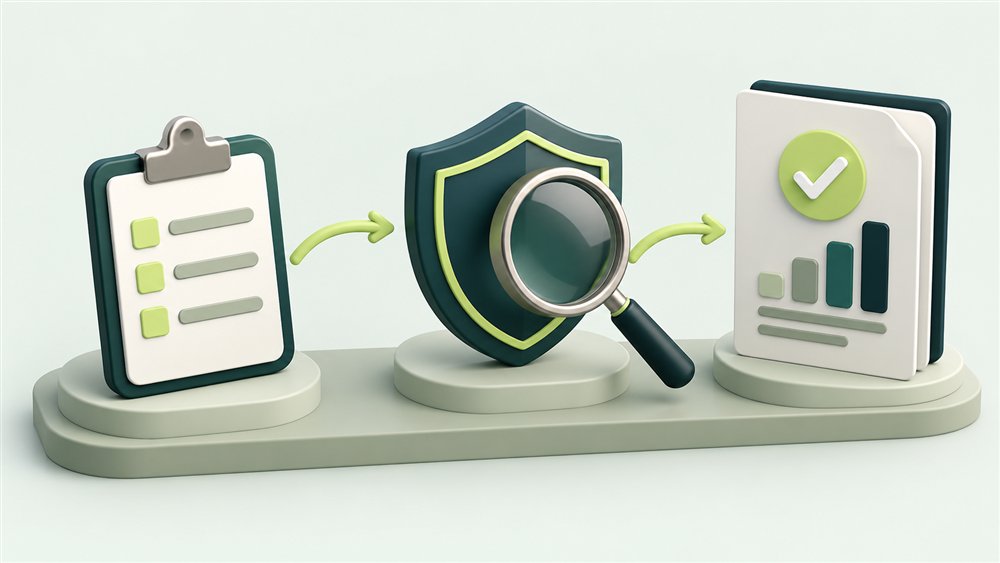
A defined security audit engagement,
from scope to handover.
Agree the scope
Confirm asset ownership, systems in scope,
access requirements, testing windows and rules
of engagement.
Assess & validate
Examine the agreed environment and document
supporting evidence for identified security
weaknesses.
Report & prioritise
Discuss findings, remediation priorities,
dependencies and ownership with your team.
Reporting & handover
Clarity for management.
Detail for technical teams.
Security audit deliverables agreed in the proposal
can include:
Executive summary of key risks and potential
business impact
Technical findings with supporting observations
and affected assets
Prioritised recommendations for remediation
Discussion of remediation responsibilities and
dependencies
Why Choose XIDEA for Cybersecurity Audit Services?
XIDEA brings more than 15 years of software and IT project experience supporting Malaysian government agencies, GLCs and corporate organisations. Our work in custom applications, Laravel development and system integration provides context for discussing how security findings affect real workflows, user permissions and connected systems.
Based in Bandar Puncak Alam, Selangor, XIDEA is a Malaysian Bumiputera company and MOF registered contractor. During scoping, discuss the people involved, relevant experience and deliverables for your proposed assessment.
Experienced software and IT teamBring application delivery, integration and operational requirements into the security discussion.
Application security focusConnect permissions, sensitive data and business workflows to the behaviours that need assessment.
Web application assessmentDefine relevant checks around user roles, access boundaries and recognised application security risks.
Network and infrastructure assessmentInclude agreed network, server and database reviews where they support the assessment objectives.
Practical remediation guidanceUse findings to identify priorities, affected systems and the owners responsible for improvements.
Management and technical reportingGive decision makers business context and technical teams the evidence needed to investigate.
Retesting and verificationWhere included in the proposal, check selected fixes and record resolved findings and remaining issues.
An audit can help organisations reviewing existing systems, preparing for a launch or responding to customer and procurement requirements. The appropriate scope depends on the information you handle, the services you operate and the questions your team needs answered.
SMEs
Understand security priorities across business applications, staff access and infrastructure before planning improvements.
Software companies
Assess customer platforms, administrative functions and integrations before release or after significant changes.
Ecommerce businesses
Review customer accounts, order workflows and connections to payment and fulfilment services.
Organisations operating financial systems
Examine access to transaction records, sensitive financial information and approval workflows within agreed systems.
Healthcare organisations
Review access to sensitive records and the applications and infrastructure supporting clinical or administrative work.
Government contractors
Identify assessment needs associated with project delivery, procurement discussions and agreed customer security requirements.
Organisations preparing for compliance
Identify control gaps and prepare evidence against agreed requirements, with any formal certification scope defined separately.
Companies launching a web or mobile application
Review user roles, information handling and supporting services while there is time to address findings before launch.
Cybersecurity audit requirements in Malaysia are not identical for every organisation. The appropriate scope may be influenced by your industry, the systems and information you operate, customer or procurement requirements, contractual obligations and any regulatory duties that apply to your organisation.
For organisations that fall within Malaysia's National Critical Information Infrastructure (NCII) framework, the Cyber Security Act 2024 and related regulations and directives include requirements concerning cybersecurity risk assessment and audit. The National Cyber Security Agency (NACSA) publishes the current Act, regulations and directives on its official legal portal. Organisations outside the NCII framework may still carry out cybersecurity audits for internal governance, customer assurance, procurement, launch readiness or risk management.
XIDEA defines each cybersecurity audit against the client's agreed objectives, systems in scope and applicable requirements. A technical security assessment does not by itself replace legal advice, regulatory certification or an independent compliance opinion where those are separately required.
The scope depends on your organisation and the systems
being reviewed. An engagement may cover applications,
internal and external networks, servers, databases,
infrastructure configuration, ICT policies, physical
controls and authorised security testing. The agreed
systems, activities and limitations are documented before
assessment work begins.
What should we share to scope a security audit?
Start with the systems you want reviewed, their owners,
your main concerns and any relevant deadlines. A list of
applications, hosting arrangements, infrastructure and
third party dependencies can help define access
requirements and testing boundaries.
How is security testing coordinated with our operations?
Asset ownership, authorisation, testing windows,
escalation contacts and excluded systems should be
confirmed before work begins. Conditions for pausing
testing can also be agreed so the security assessment
fits your operational requirements.
What happens after the security audit report?
Your team can use the findings to assign remediation
owners, prioritise improvements and schedule technical
changes. Where retesting is included in the proposal,
selected findings can be checked again to record what has
been resolved and what still requires attention.
Does every organisation in Malaysia need a cybersecurity audit?
Not every organisation is subject to the same legal, regulatory or contractual requirements. The appropriate audit scope depends on your sector, systems, customer requirements, contractual obligations and any applicable regulatory duties. Organisations should confirm the requirements that apply to them before defining the assessment scope.